
Introduction
Cranes are vital for lifting, moving, and positioning heavy materials in industrial environments. However, improper installation of **gantry or EOT cranes** can lead to operational failures, safety risks, and high repair costs.
This guide covers the most common mistakes to avoid when installing a gantry or EOT crane, along with professional recommendations for a seamless and safe setup.
Why Proper Installation Matters
- ✅ Ensures operator and workplace safety
- ✅ Prevents premature equipment wear or failure
- ✅ Guarantees load balance and hoist accuracy
- ✅ Maintains compliance with safety regulations
- ✅ Enhances productivity with smooth operation
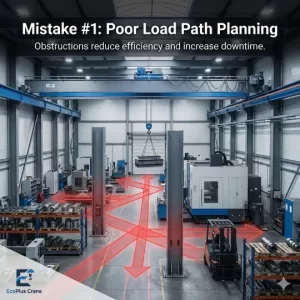
Mistake 1: Ignoring Load Path and Building Layout
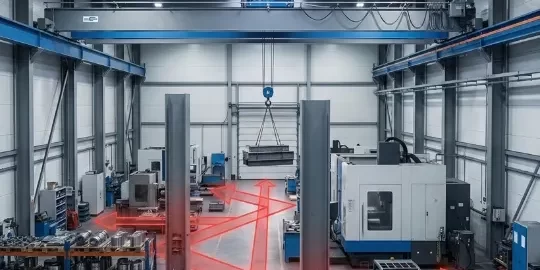
Improper alignment with the material flow can result in inefficient operations. Avoid placing the crane where obstructions (pillars, machinery, etc.) block smooth travel or load swing.
Mistake 2: Underestimating Load Capacity Requirements
One of the most critical **installation mistakes** is choosing a crane without properly calculating the maximum load. Always include dynamic load factors and usage frequency when selecting specs.

Mistake 3: Skipping Soil/Foundation Checks for Gantry Cranes
Gantry cranes require strong, level surfaces for safe operation. Improper foundation may lead to misalignment or tipping hazards. Always perform soil testing and, if needed, reinforced flooring.

Foundation Requirements – Gantry Cranes
| Load Capacity | Minimum Concrete Thickness | Soil Strength Requirement |
| Up to 5 tons | 200 mm | 1.5 kg/cm² |
| 5–10 tons | 250 mm | 2.0 kg/cm² |
| 10–20 tons | 300 mm | 2.5 kg/cm² |
Mistake 4: Poor Alignment of End Carriages (EOT Cranes)
Incorrect alignment can lead to derailment, skewing, and motor wear. Always check runway rail levelness, girder straightness, and wheel alignment using precision instruments.
Mistake 5: Inadequate Electrical Setup
Faulty wiring, improper earthing, or voltage mismatch can damage the hoist or controls. Make sure to follow IS 732/IS 3043 standards and include surge protection devices.
Mistake 6: Ignoring Safety Equipment Integration
Installers often delay adding limit switches, overload relays, buffer stops, or emergency brakes. These components must be fitted and tested during installation—not after an incident occurs.
Mistake 7: Failing to Train Operators Post-Installation
Operator training is essential for correct usage and emergency handling. Every new installation should be followed by user familiarisation sessions and maintenance walkthroughs.
Mistake 8: No Routine Inspection Mechanism
Installation is not the end—many faults arise from the lack of follow-up inspections. Always establish a preventive maintenance schedule with weekly and monthly checks logged.
Best Practices for Flawless Crane Installation
- 🛠️ Hire certified crane installers
- 📐 Conduct site measurements twice
- 📄 Keep load charts and manuals accessible
- 🔍 Inspect all bolts, welds, and fasteners
- ⚙️ Perform trial runs before handover
Conclusion
Common mistakes to avoid when installing a gantry or EOT crane range from layout issues to electrical mismatches. Preventing these errors ensures maximum uptime, operator safety, and crane longevity.
For professional installation services, EcoPlus Cranes ensures your gantry or EOT crane is installed according to ISO and IS standards—with a zero-defect policy.